Commercial Floor Stripping and Waxing: When to Do It, How It Works and What to Expect
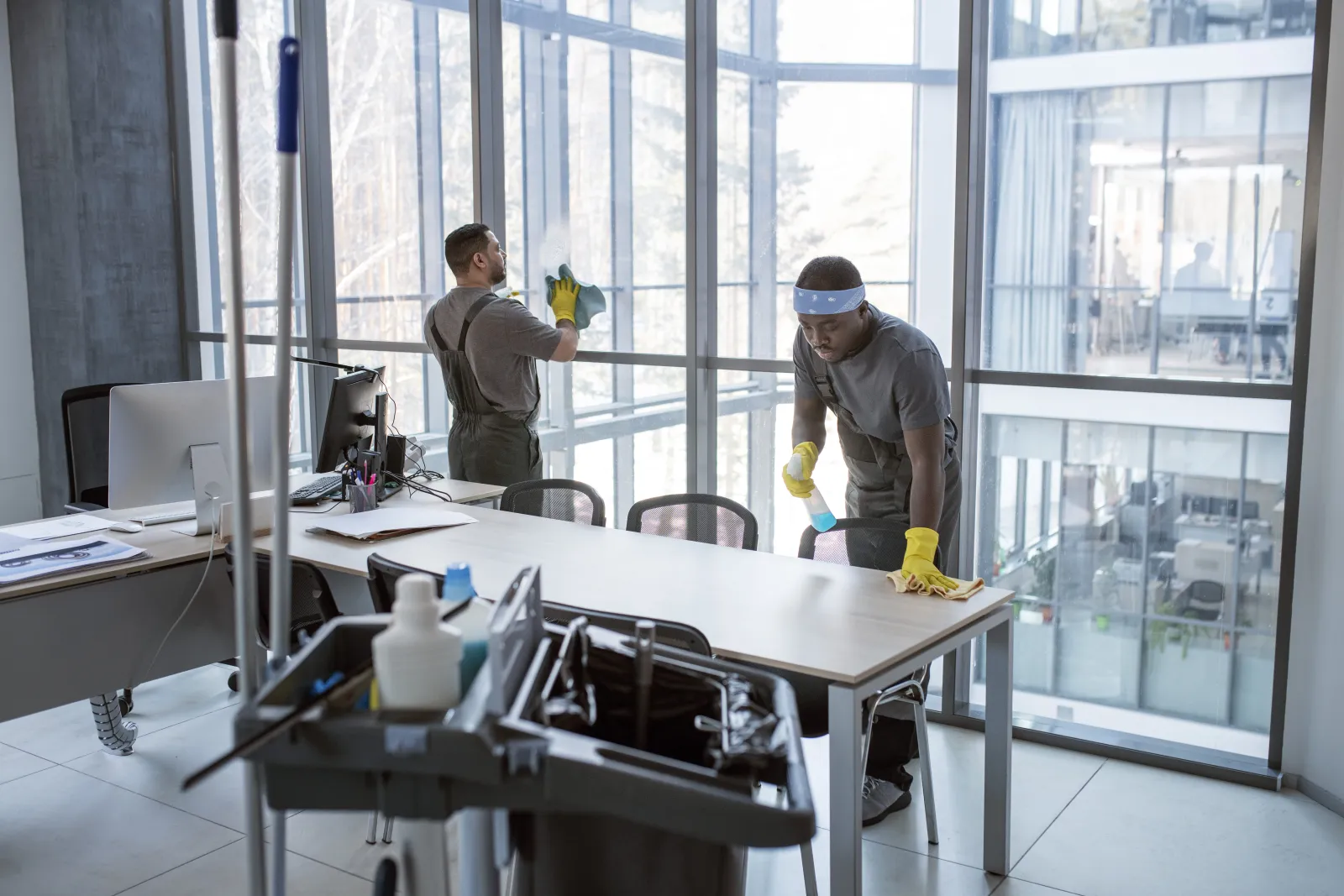
Floors take more abuse than any other surface in a commercial building. Foot traffic, carts, chairs, grit tracked in from the parking lot, spills and constant mopping slowly wear down the protective finish. Eventually, even a floor that is cleaned every night starts to look dull, scuffed and tired.
When daily cleaning stops restoring the shine, the solution is often a full strip and wax. This guide explains what commercial floor stripping and waxing is, how to tell when your floors need it, what the process looks like step by step and how to protect your investment afterward. It is written for business owners, facility managers and property managers in McAllen, Corpus Christi, Harlingen and across South Texas.
What is floor stripping and waxing?
Many commercial floors, especially vinyl composition tile (VCT) and other resilient flooring, are protected by layers of floor finish, often called wax. This finish provides shine and acts as a sacrificial layer that absorbs wear so the tile underneath is not damaged.
Over time, the finish gets scuffed, scratched and discolored. Repeated mopping and polishing can also trap dirt in the layers. When that happens, the old finish needs to be completely removed, or stripped, and replaced with fresh coats. That is floor stripping and waxing.
It is different from regular mopping or burnishing:
- Daily cleaning removes surface dirt
- Burnishing or buffing restores shine to an intact finish
- Scrub and recoat removes the top layers and adds new finish without removing everything
- Stripping and waxing removes all the old finish and applies new
Our commercial floor stripping and waxing service covers the full process.
Which floors can be stripped and waxed?
Not every floor is suitable. Stripping and waxing is most common on:
- Vinyl composition tile (VCT)
- Some sheet vinyl and other resilient tile, depending on the manufacturer
It is generally not used on:
- Carpet
- Natural stone, unless a stone-specific process is used
- Most wood and laminate floors
- Many modern luxury vinyl products that come with a factory finish and should not be waxed
Always check the manufacturer's care instructions. Using the wrong process can damage a floor. A professional provider can identify the floor type and recommend the right approach.
Signs your floors need stripping and waxing
How do you know when it is time? Look for these signs:
- Dull or cloudy appearance that does not improve after cleaning
- Yellowing or discoloration, especially along edges and corners
- Heavy scuffs and black marks that no longer wipe away
- Dirt trapped in the finish, visible as gray patches in high-traffic paths
- Peeling or flaking finish
- Uneven shine between high-traffic and low-traffic areas
- Buildup in corners and along baseboards
- Floors that feel sticky or slippery, which can signal buildup or an improper finish
If your floors show several of these, a scrub and recoat may no longer be enough, and a full strip is the better choice.
How the process works, step by step
Here is what a professional crew typically does.
1. Plan and prepare the space
The crew reviews the area, identifies the floor type, protects walls, baseboards and fixtures and clears or moves furniture where needed. Because the process requires wet chemicals and drying time, the area is usually blocked off to foot traffic. Many businesses schedule the work after hours or over a weekend.
2. Sweep and dust-mop
Loose dirt and debris are removed first so they do not scratch the floor during stripping.
3. Apply stripper solution
A floor stripper is applied to the surface and left to sit for the recommended time, which allows it to break down the old finish.
4. Agitate
A floor machine with the right pad scrubs the surface to loosen the softened finish. Edges, corners and tight spots are detailed by hand because machines cannot reach them.
5. Remove the slurry
The dissolved finish and dirt are picked up with a wet vacuum or similar equipment. Waste solution should be handled and disposed of properly according to local requirements.
6. Rinse and neutralize
The floor is rinsed, usually more than once, to remove stripper residue. Leftover residue can interfere with the new finish, causing cloudiness or poor adhesion.
7. Let the floor dry fully
The floor must be completely dry before new finish is applied. Humid conditions, which are common in the Valley and along the Gulf Coast, can lengthen drying times, so scheduling and ventilation matter.
8. Apply sealer, if recommended
Some projects use a sealer to protect the tile and improve the bond of the finish.
9. Apply multiple coats of finish
A typical process uses several thin coats of floor finish, with drying time between each coat. Thin coats dry more evenly and last longer than a few thick ones.
10. Cure and return to service
The floor may look dry before it has fully cured. Heavy traffic, furniture and carts should be kept off until the crew gives the all-clear, to avoid scuffs and imprints.
How long does stripping and waxing take?
The time depends on the size of the area, the number of finish layers on the floor, the condition of the tile and the number of coats applied. Smaller spaces may be done in a day. Larger spaces or those with heavy buildup can take longer, and the work is often phased by zone so a business can stay open.
If your business cannot shut down, tell your provider early. A good crew can plan work in sections, schedule overnight or weekend hours and coordinate with your staff.
What affects the cost?
Floor stripping and waxing is typically priced by area and condition. The main variables are:
- Total square footage
- Number of old layers of finish
- Difficulty of access, including furniture, shelving and tight spaces
- Number of coats of new finish
- Whether sealer is included
- After-hours or weekend scheduling
Projects like this are quoted separately from routine janitorial service. Our guide to commercial cleaning costs explains how project pricing differs from recurring monthly fees.
Why not do it yourself?
It can be tempting to strip floors with in-house staff, but there are real risks:
- Slip hazards. Wet stripper and slurry are slippery. Proper signage and procedures matter. Workplace safety rules require walking surfaces to be kept in safe condition.
- Chemical safety. Strippers and finishes require proper handling, ventilation and protective equipment.
- Equipment. Professional floor machines and wet vacuums make a big difference in quality.
- Uneven results. Missed spots, residue and uneven coats show up as streaks or cloudy patches.
- Wasted time. The job takes a lot of labor and can pull your staff away from their real work.
A professional crew has the training and equipment to do the job more safely and efficiently.
How to keep floors looking good after a strip and wax
The finish is designed to be maintained. A good routine makes it last far longer.
- Use entrance mats. Most of the grit that damages floors comes in on shoes. Quality mats at every entrance dramatically reduce wear.
- Dust-mop daily. Fine grit acts like sandpaper under foot traffic.
- Damp-mop with a neutral cleaner. Harsh or the wrong chemicals can dull or break down the finish.
- Avoid too much water. Standing water can damage the finish and the tile.
- Burnish regularly. High-speed burnishing restores shine to finished floors.
- Schedule periodic scrub and recoat. Refreshing the top layers before the finish fails reduces the need for a full strip.
- Use furniture pads. Chair and cart wheels can gouge the surface.
A recurring janitorial service that understands floor care helps make your finish last.
How often should floors be stripped?
There is no universal schedule. Many facilities strip and refinish every one to several years, depending on traffic and maintenance. Retail stores, schools and clinics with heavy foot traffic may need more frequent refinishing than quiet offices. Regular maintenance and periodic recoating can extend the time between full strips.
Questions to ask a floor care provider
- Have you worked on my type of flooring?
- How many coats of finish do you recommend and why?
- How will you protect walls, baseboards and furniture?
- How long will the floors be out of service?
- Can the work be scheduled after hours?
- What maintenance routine do you recommend after the project?
- What does the proposal include?
For general advice on vetting any provider, read how to choose a commercial cleaning company.
Floor care projects across South Texas
Floor care is a common project for retail, schools, clinics, offices and warehouses. You can read about our floor strip and wax project in Corpus Christi, and visit our location pages for Corpus Christi, McAllen and Harlingen. If your business has high-traffic hard floors, you may also like our office cleaning checklist, which includes floor maintenance tasks.
Frequently asked questions
What is the difference between stripping and refinishing?
Stripping removes the old finish completely. Refinishing can mean a scrub and recoat, which removes the top layers and adds new finish, or a full strip followed by new coats.
Is floor wax slippery?
A properly applied and cured finish is designed to be safe to walk on. Slipperiness is more often caused by too much finish, residue, moisture or the wrong cleaning products.
Can you strip and wax while we are open?
Often yes, by working in sections or after hours. Tell your provider about your hours so they can plan around them.
How long before we can walk on the floor?
It depends on the finish and conditions. Your crew will tell you when it is safe for light foot traffic and when it has cured enough for furniture and carts.
Will stripping remove stains?
Stripping removes dirt and discoloration in the finish, but it may not remove stains that have penetrated the tile itself.
Request a Commercial Cleaning Quote